
About the proposed Rockford data centers
What is a data center?
Data centers are massive metal buildings filled with huge computers, servers, and other digital infrastructure. While some data centers are used for digital services like cloud storage, most new data centers are being built especially for artificial intelligence (AI) computing.
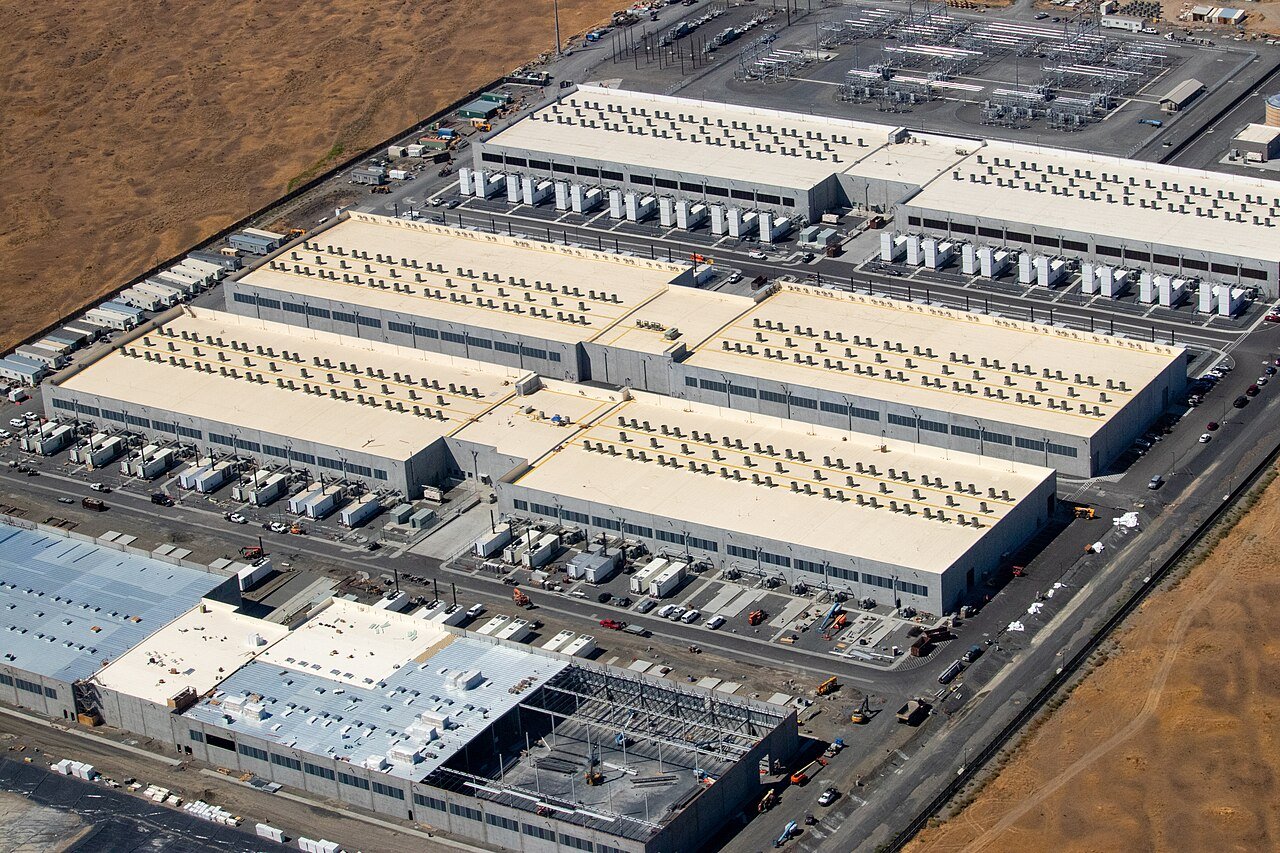
What do data centers do?
Data centers can be thought of as factories without people.
Tech companies are scrambling to replace every job, from nurses to teachers, with AI. Data centers can be thought of as the factories where this non-human work happens.
Unlike a normal factory, which creates jobs and benefits for the local community, data centers don’t employ many people.
The profit created by data center-powered AI work doesn’t go to the community — it goes to out-of-state tech companies and billionaires.
The local community is left to deal with the data center’s environmental devastation, water use, higher electricity costs, and pollution that has been linked to increased risks of rare cancers and miscarriages.
More about the specific impacts of data centers below.
Can we stop them?
Yes! In spite of undemocratic backdoor deals by city officials, everyday people around the country have been coming together to say NO to data centers, and we are winning!
Resisting a data center in your community is one of the most popular issues that everyone agrees on — Republicans and Democrats, red states and blue states, urban and rural communities.
Visit our get involved page to get the latest on what you can do:
But isn’t the Monarch Energy hyperscale data center a done deal?
Rockford city officials have said that the Monarch Energy data center can’t be stopped for legal reasons.
But no one, including the current and previous mayor, have shown the public any document that unequivocally binds the city to allow the data center to proceed.
The reality is: Not all agreements are valid and enforceable. If a contract is against public policy (including health and safety dangers, violations of laws and regulations, or contrary to environmental standards and regulations), it can be found to be void in court.
The Monarch Energy data center can (and must!) be stopped.
What’s the latest status of Rockford-area data centers?
Check our timeline page for the most recent updates:
Where would the data centers be located?
Monarch Energy is planning a massive hyperscale data center at 8685 Friday Rd. along Rockford’s southern edge:
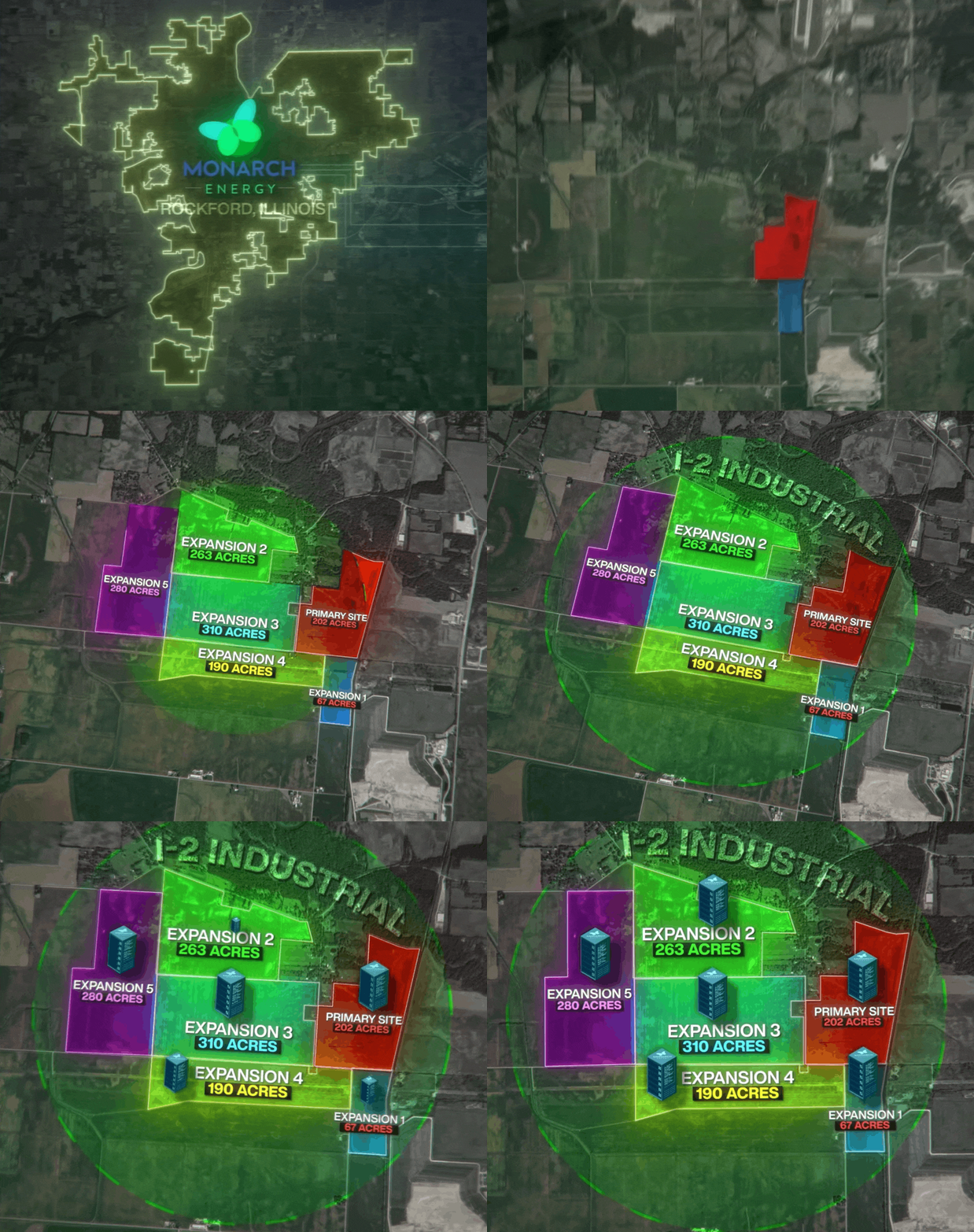
Screenshot: Monarch Energy Youtube channel
Microsoft is planning a data center in Cherry Valley next to the orchard:
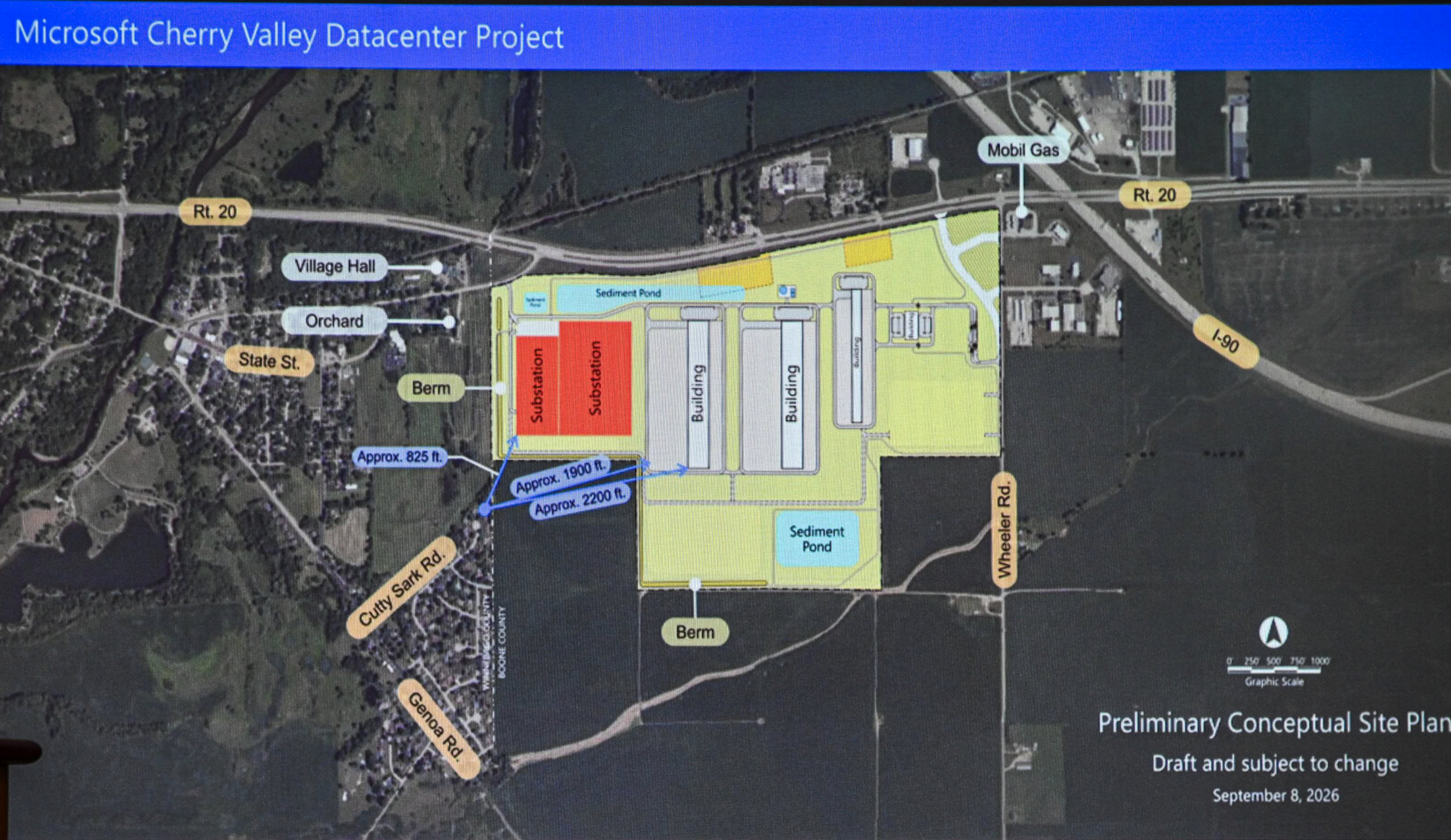
Datawatt Energy has proposed a hyperscale data center outside Belvidere near the intersection of I-90 and Genoa Rd:
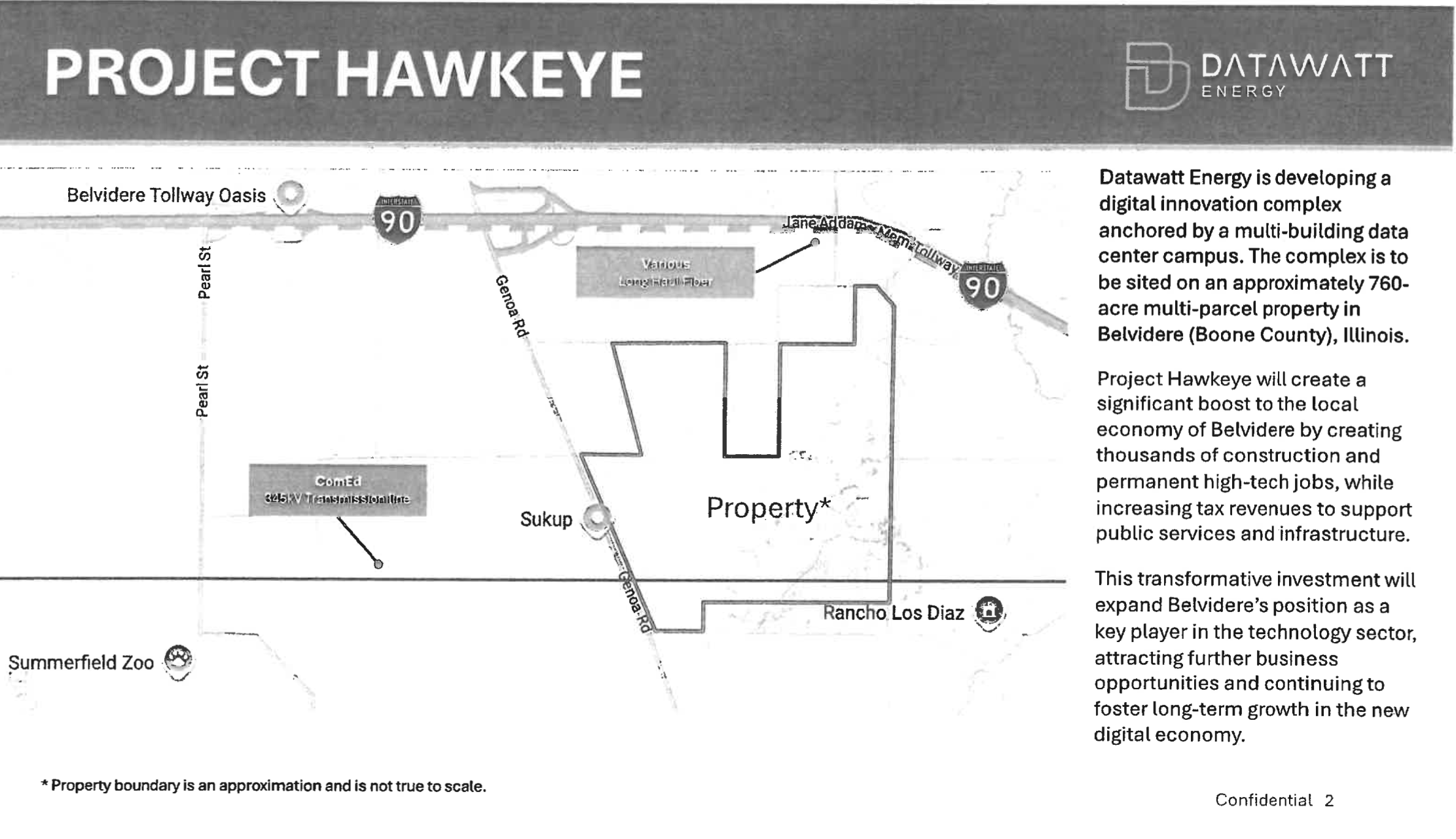
Source: Initial concept slide deck. Download PDF from the City of Belvidere website
For more detail on the status and background of each of these sites, check the updates page.
How would a data center impact Rockford?
From data centers across the country, we know about what the impacts are. Just a few that we might expect include:
1. Higher electricity prices across Rockford
Across the country, energy bills have gone up for regular ratepayers (individual households and small businesses), directly attributable to the buildout of data centers and associated energy infrastructure.
A recent analysis of the 13 states covered by PJM found a projected electricity bill increase of up to 60% by 2030—about $9.3 billion in extra costs—largely due to data‑center expansion.
Despite promises to pay their fair share, the industry has fought against obligations to ensure its costs aren’t passed along to ratepayers, in states including Georgia and Ohio.
2. Extreme water use
In an October 2025 promotional video, Monarch Energy estimated that the proposed data center would use three million gallons of water per day.
Since Rockford currently uses an average of 16.7 million gallons of water per day, this data center would increase Rockford’s total water use by 17%.
3. Water contamination, including possible connections to rare cancers and miscarriages
Data centers can cause water contamination by increasing concentrations of nitrates or other pollutants in groundwater and/or releasing PFAS that are added to cooling systems to prevent corrosion.
Reports have linked an Amazon data center in Oregon with increased risks of rare cancers and miscarriages.
4. Increased heat
Hyperscale data centers like the one proposed by Monarch Energy raise surrounding temperatures by an average of 3.6 degrees and, in some cases, as much as 16 degrees compared to surrounding areas.
In a time when average temperatures are already increasing and extreme heat becomes more frequent, this could further the chance of neighboring communities experiencing potentially dangerous temperatures.
5. Air pollution
Data centers could create an estimated $20 billion yearly public health burden due to air pollution from fossil energy generation, often disproportionately impacting already vulnerable communities.
Pollution comes in many forms, including but not limited to: CO2, NOx, and SO2
6. Millions of dollars of taxpayer money via handouts
A FOIA request revealed an agreement between the state of Illinois and Monarch
Another FOIA request revealed what may be more agreements between the city of Rockford.
Per WIFR: “In May 2025 City Administrator Todd Cagnoni sent an inducement letter — which typically present incentives to possible developers — to Monarch Chief Operating Officer and co-founder Charles Koontz. WIFR requested that document but was rejected”
In an October 2025 promotional video, Monarch Energy boasted that the Rockford area would provide “strong incentives” (AKA tax breaks)
Studies show that each data center job can cost local governments nearly $2 million in subsidies.
At least 10 states spend $100 million or more a year by providing data centers with sales tax exemptions on various purchases they make. Virginia lost $1.6 billion in FY 2025 to this exemption; Texas lost $1 billion the same year. In Illinois, $370 million in tax breaks that big tech got in FY 2024 equals the amount of federal pandemic relief the state redistributed to its 1,200 smallest communities.
7. Noise pollution
Data centers produce significant noise pollution primarily from diesel generators, gas turbines, and cooling (HVAC) systems. Noise impacts data center workers, nearby communities, and local wildlife.
Internal noise levels can reach up to 96 A-weighted decibels (dBA)—above 85 dBAs is considered harmful to hearing.
Data centers produce dBAs & dBCs. Most ordinances only regulate dBA frequencies, but dBCs, which measure low frequency sounds, can also be disruptive to physical and mental health. Cryptomining, in particular, is very very loud.
Diesel generators, used for backup power and sometimes as a primary power source, are often allowed to exceed local noise limits in “emergency” scenarios.
8. Disruption for agriculture, wildlife, and local ecosystems
The constant buzz of fans and warmth of motors could have wide-ranging negative impacts on cattle, corn yields and biodiversity. In particular, for grain growers, if ambient night time temperatures don’t naturally drop due to warmth from electrical equipment, then corn and wheat yields suffer.
9. A small number of mostly low-wage jobs
Data center construction jobs are temporary and often go to out-of-state workers.
A gigantic hyperscale data center might employ 50 to 150 permanent people. Many of those jobs are security, maintenance, or lower skilled technicians earning as little as $15 per hour; those workers can be hired through temporary agencies or as subcontractors.
Some data centers are beginning to outsource security jobs to AI-powered robotic dogs.